After living in hell for a month, the people of Bucha tell what happened during the time that the Russian forces took the city.
Bucha will be one of the scenarios that will be remembered from this war in Ukraine. After a month of occupation by the Russian forces, Bucha has been liberated, but in the city hundreds of bodies have been left lying on the street and inside the houses and yards, some of them showing signs of torture.
Behind Saint Andrew’s church there is a mass grave with more than 100 bodies. In the streets there were hundreds of destroyed cars, most of them marked with a V, a symbol from the Russian forces. In the cemetery 3 of the
city, the police try to identify all the corpses that have been found these days. Hundreds of people have been living in shelters without water and electricity. Some of them are still sleeping there because they are afraid and because their houses have been destroyed.
This photo essay shows what the Russian forces left behind and how the population is trying to go on after one month living in hell.

Windshield glass of a school bus on a street in Bucha.
-
A women in her thirties half naked has been found dead with a shot on her head. The house had been occupied by Russian soldiers -
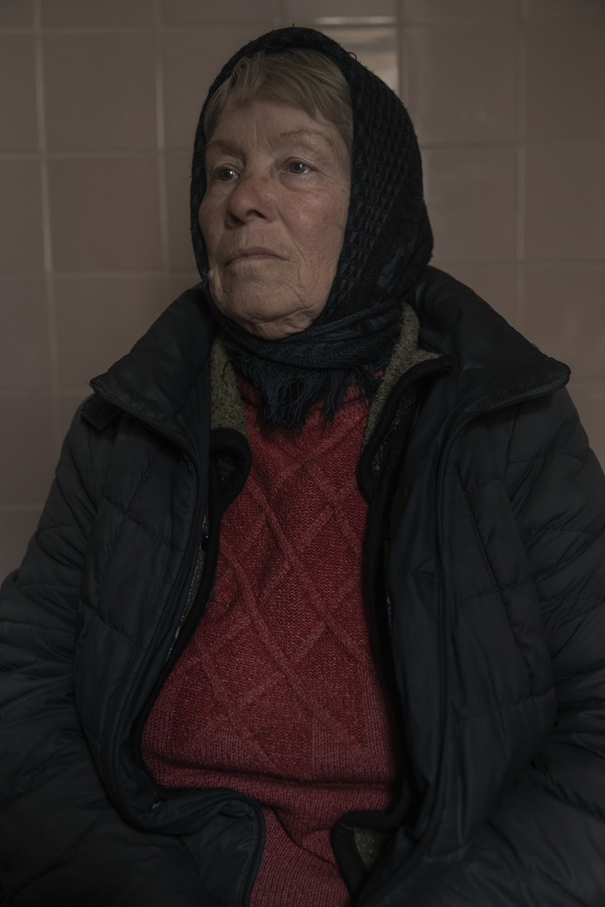
Lidia Borysenko, 74, lived through the entire Russian occupation. He didn't want to leave. "I've lived here since 1972, I'm not leaving now". Her husband died days before the Russians entered their city.

Lidia dries bread on her sofa. It’s been more than a week since the Russian troops left, but Lidia is still afraid of running out of bread, so she dries it for storage.
-
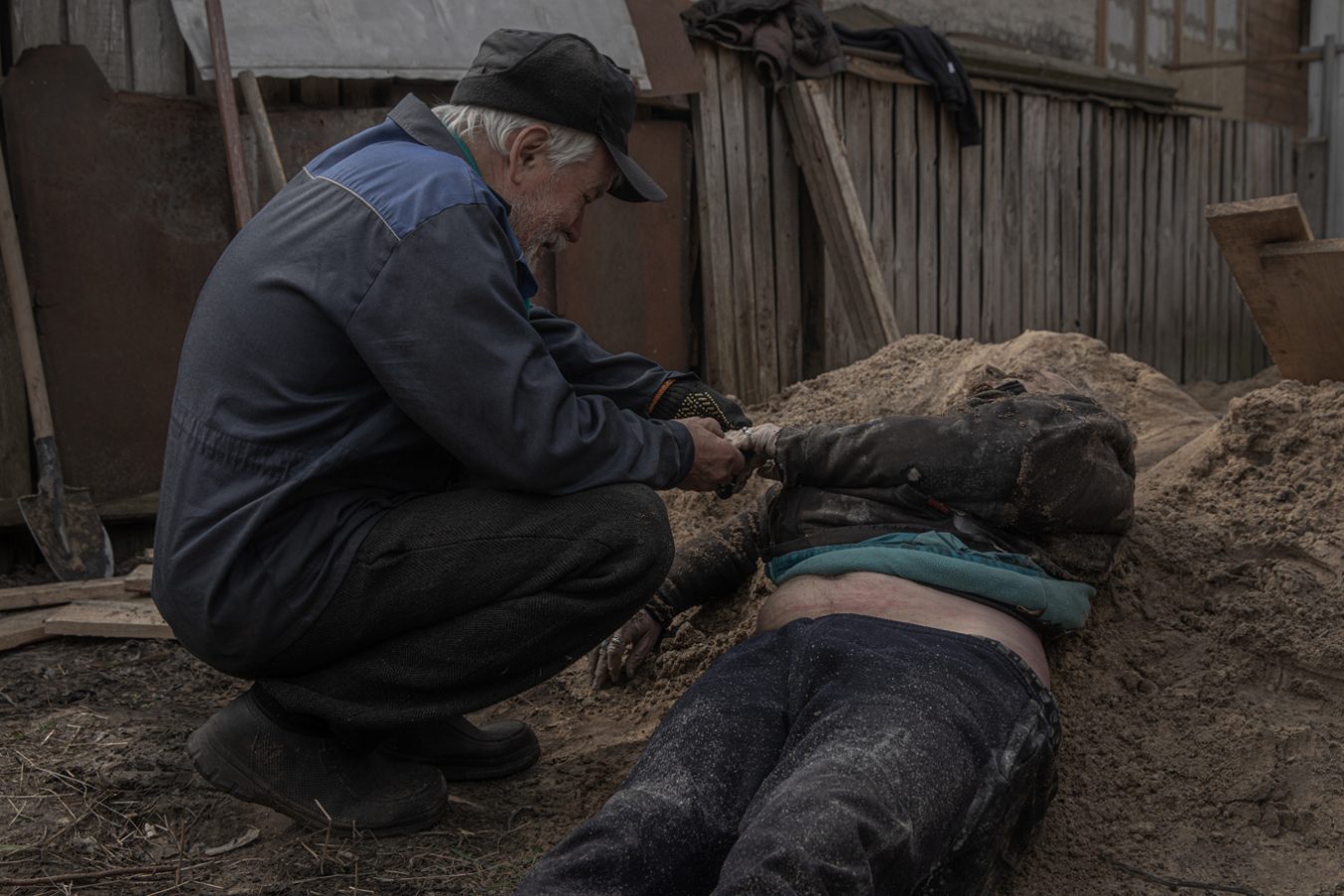
Valeriy digs up his son Oleksey. The Russians shot him while he was cycling through Bucha, Valeriy went looking for him and buried him in his garden. Now, after Bucha's release, they dig him up so he can perform an autopsy. -
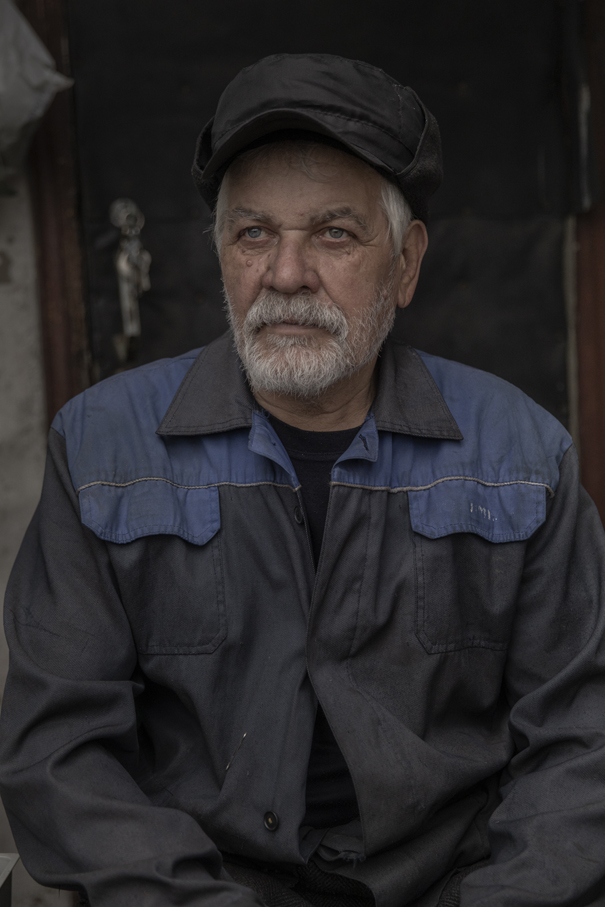
Valeriy, 68 years old, lives in Bucha with his son Andriy. His wife died months before the Russian invasion. Oleksey his eldest son was killed on March 12.
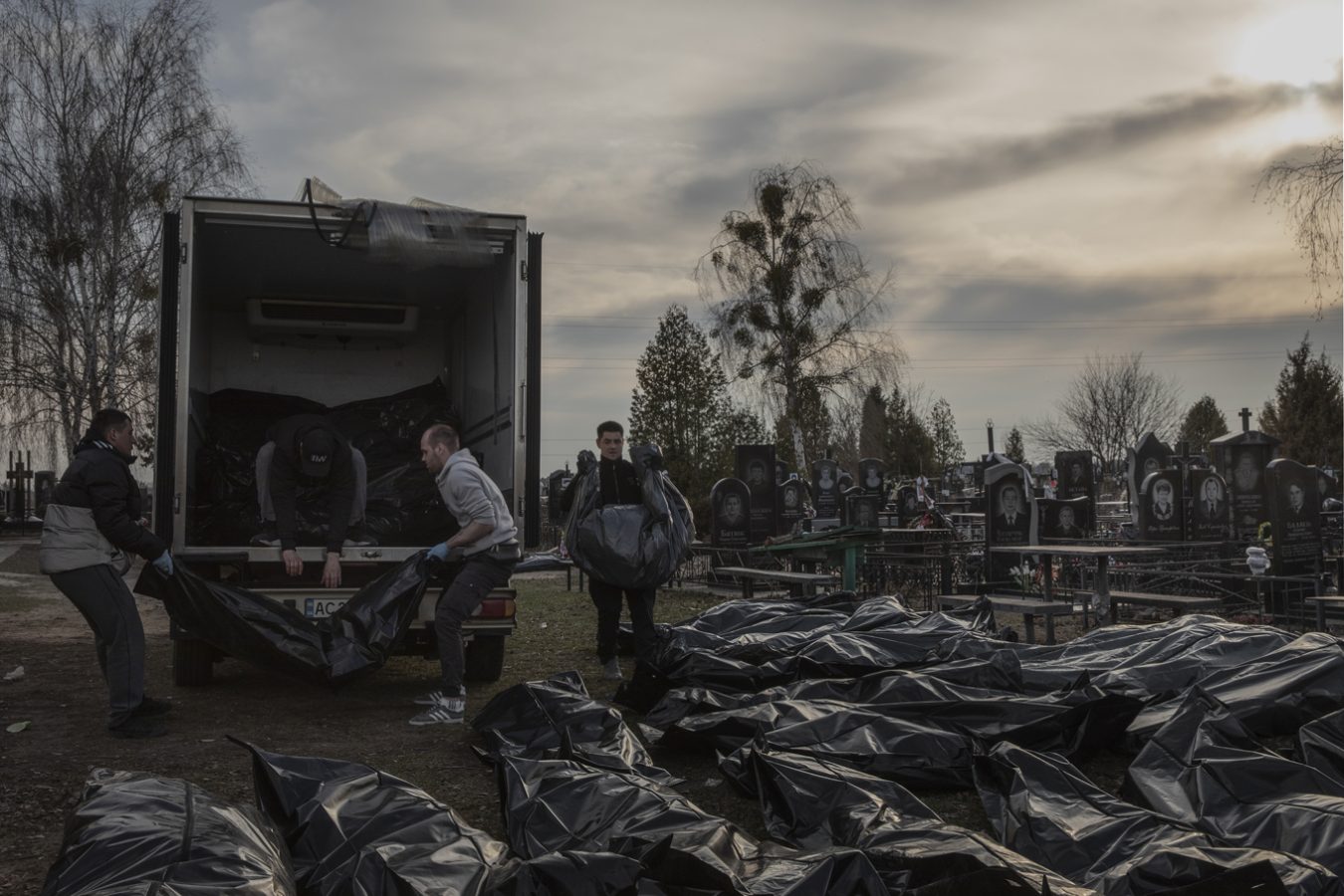
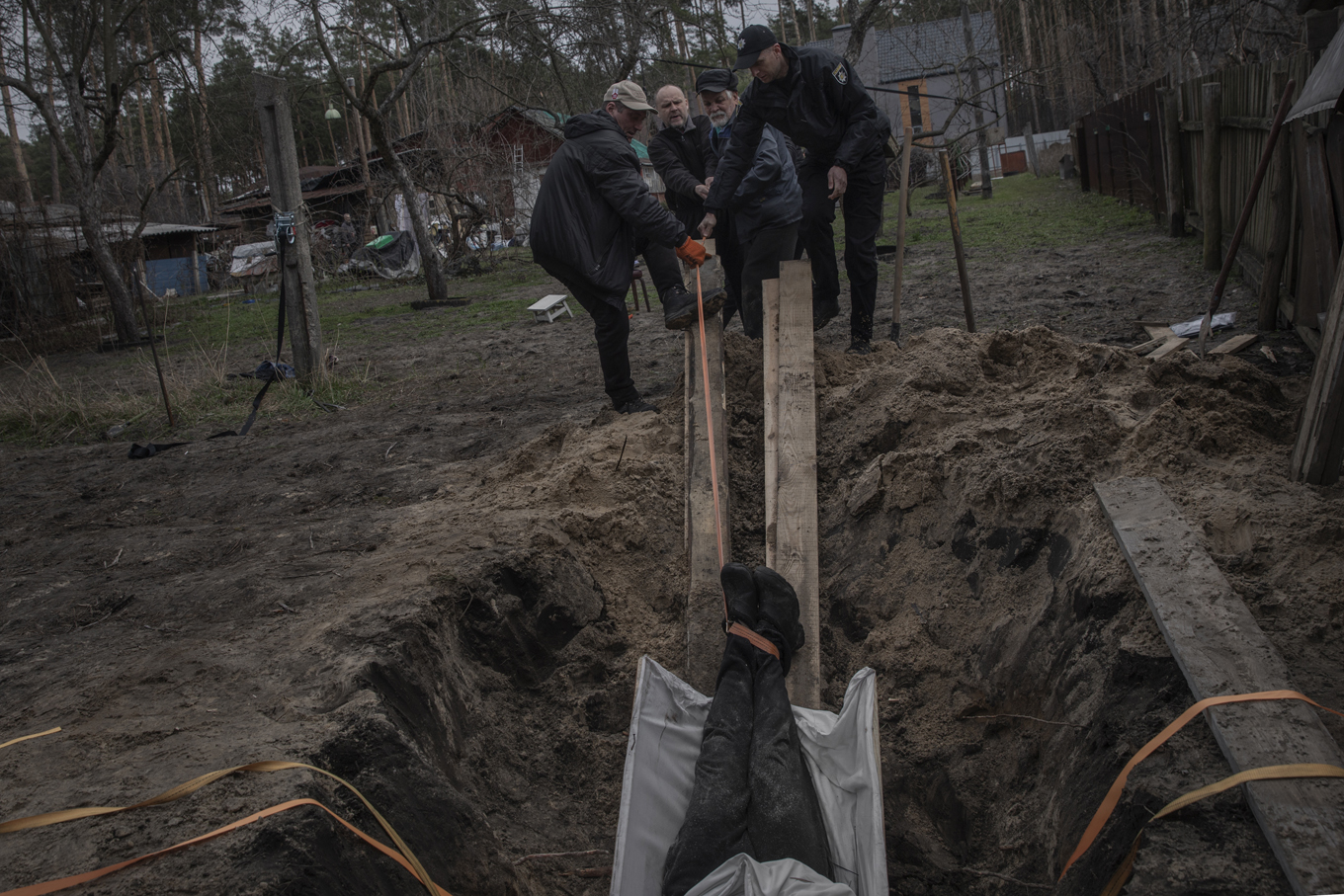
In Bucha cemetery number 3, dozens of bodies accumulated during the first days. Once registered, they were distributed in different morgues waiting for autopsies and to be able to identify them.
-

Vitaliy Chayna, 27, is one of the people who helped collect the bodies, which the Russians left everywhere, in white vans. -
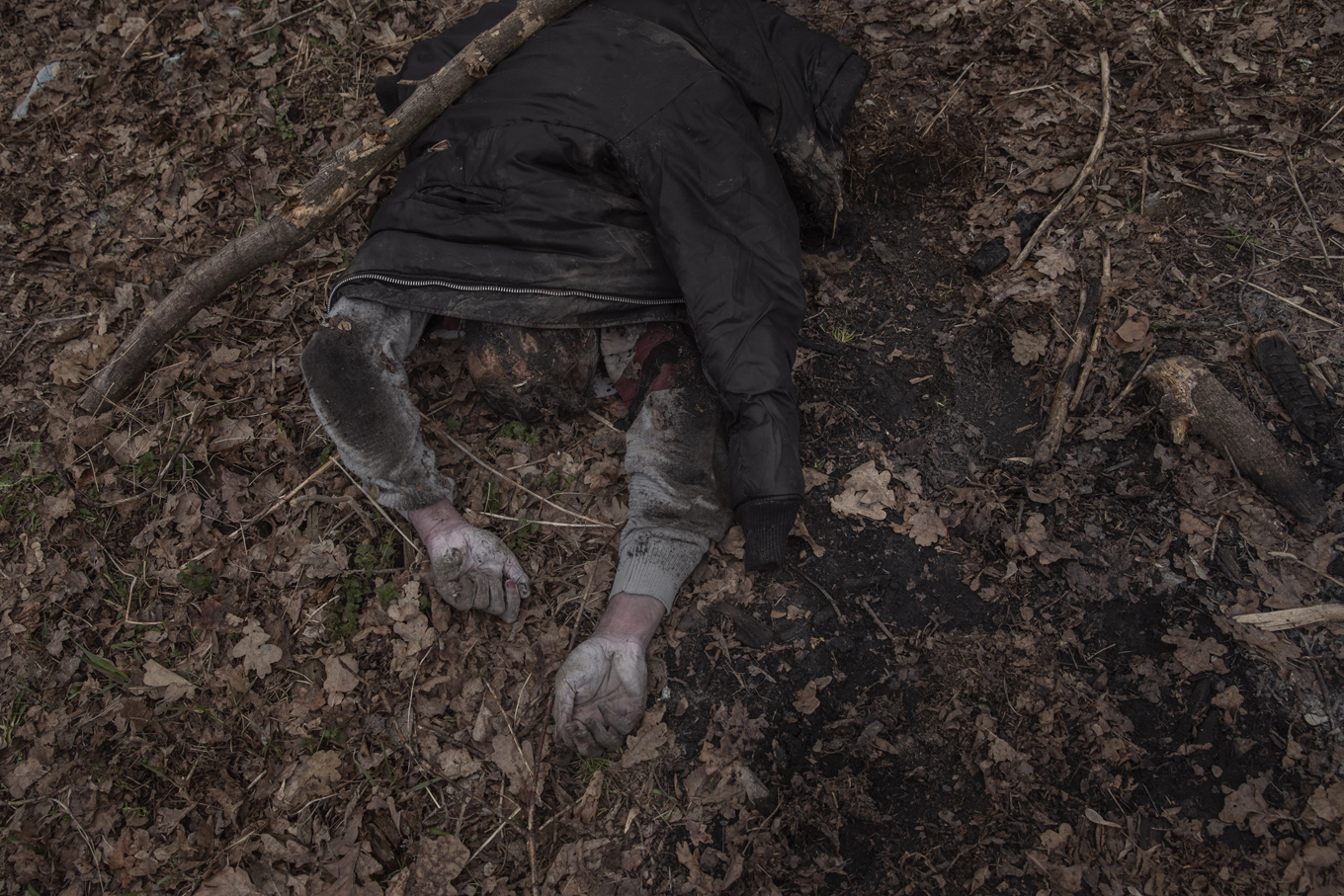
Lifeless body in the surroundings of Bucha. Vitaly said that during the first days they recovered about 30 bodies a day. -
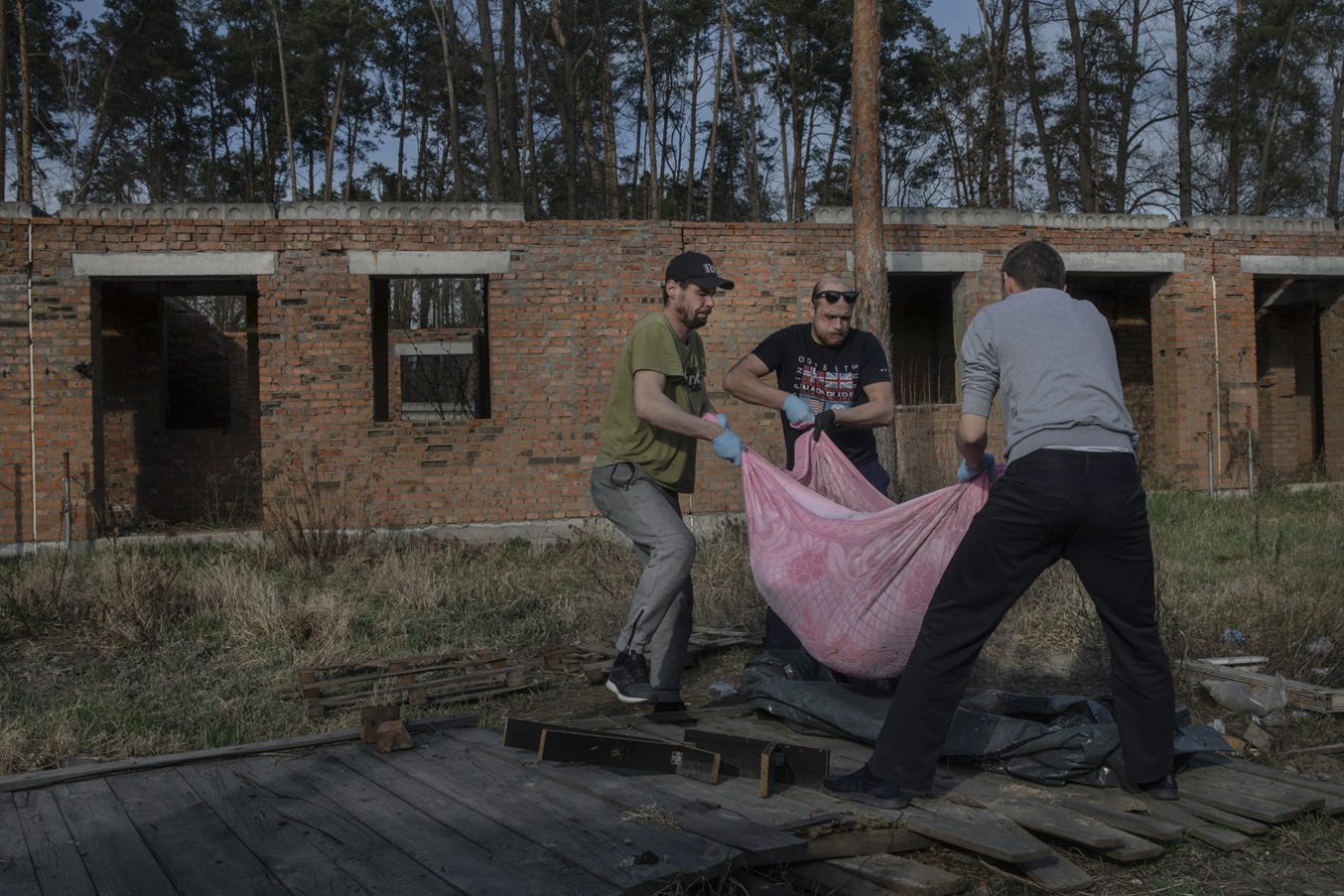
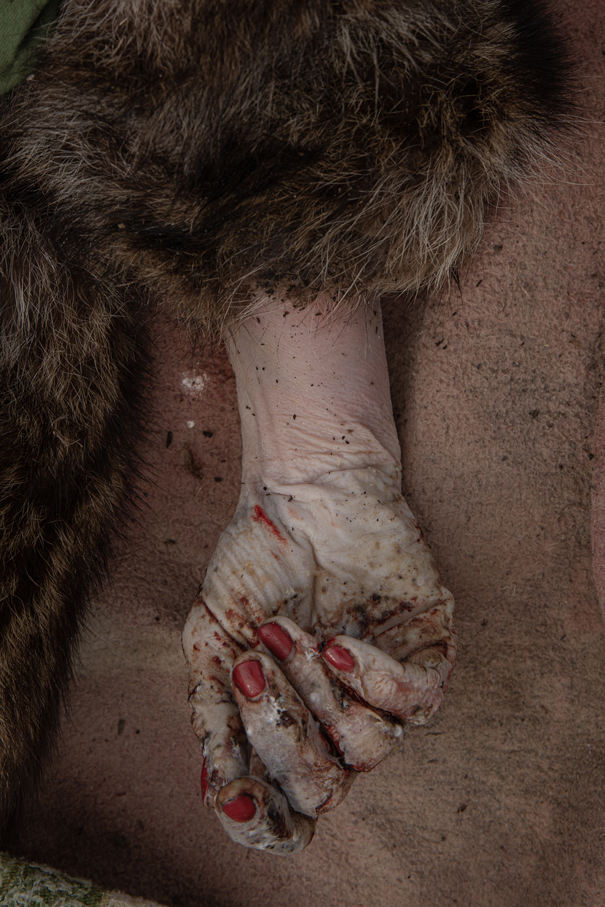
Vitaly and his companions collect the corpse of Oleksei Kadura. He had been wrapped in a pink blanket in front of his father-in-law’s house for weeks.
-
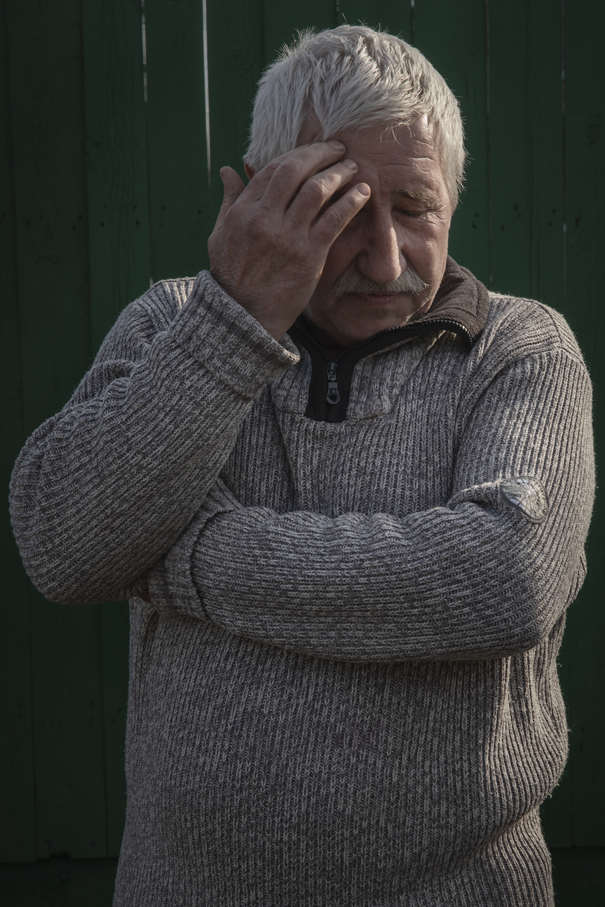
Mykola Savenko, 60, waits for the arrival of the white van that takes the bodies to the cemetery. His son-in-law, Oleksei Kadura, was murdered in front of his house on March 10. -

Ruslana is 10 years old. She spent the entire occupation in the basement of her house with his parents, brother and grandmother. They couldn't get out because they didn't have a car and when they got one it was too late.
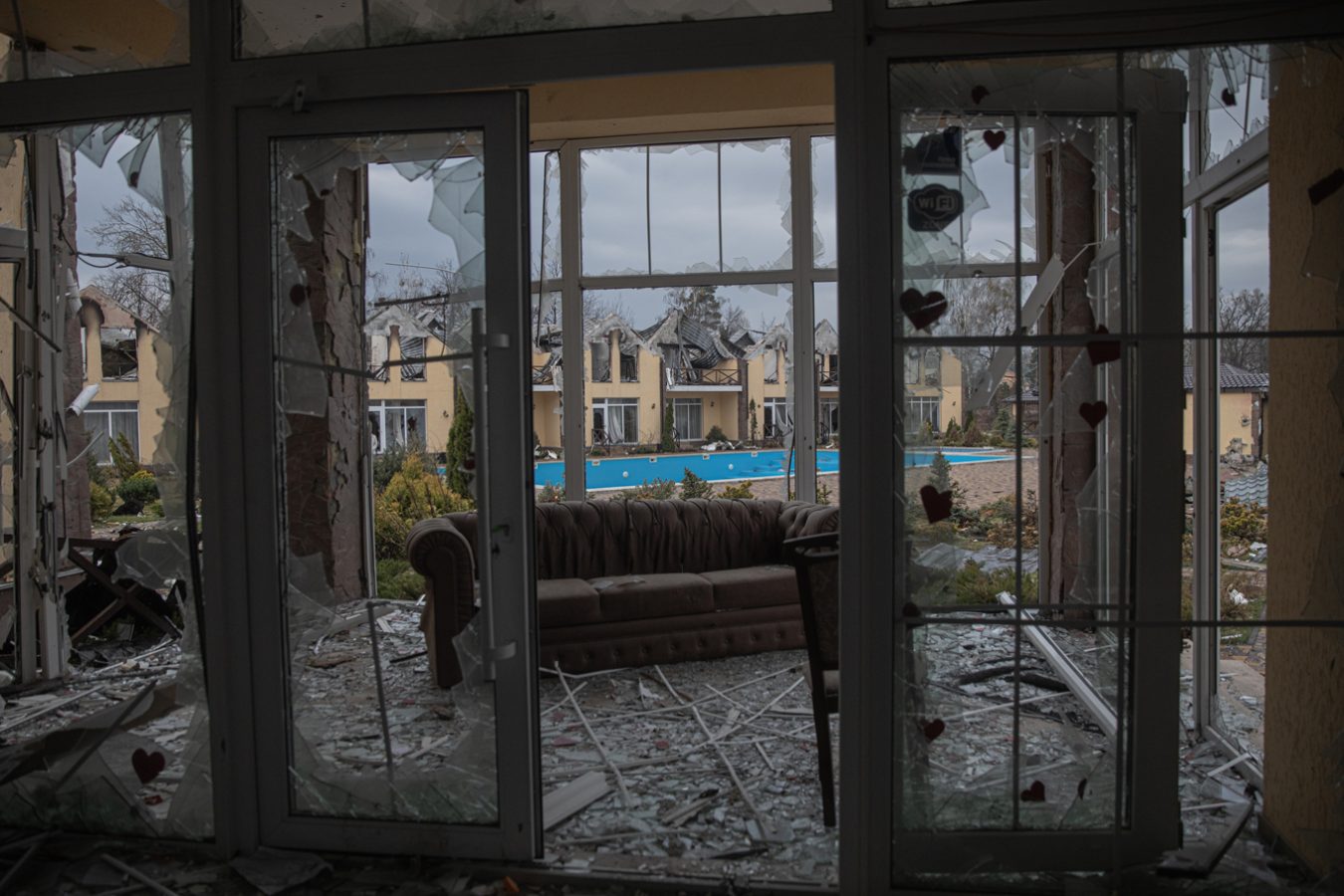
At the entrance of Bucha is the Villa San Marino, a place where families used to go to relax, it has been destroyed by Russian attacks. In the garden there was a trench.
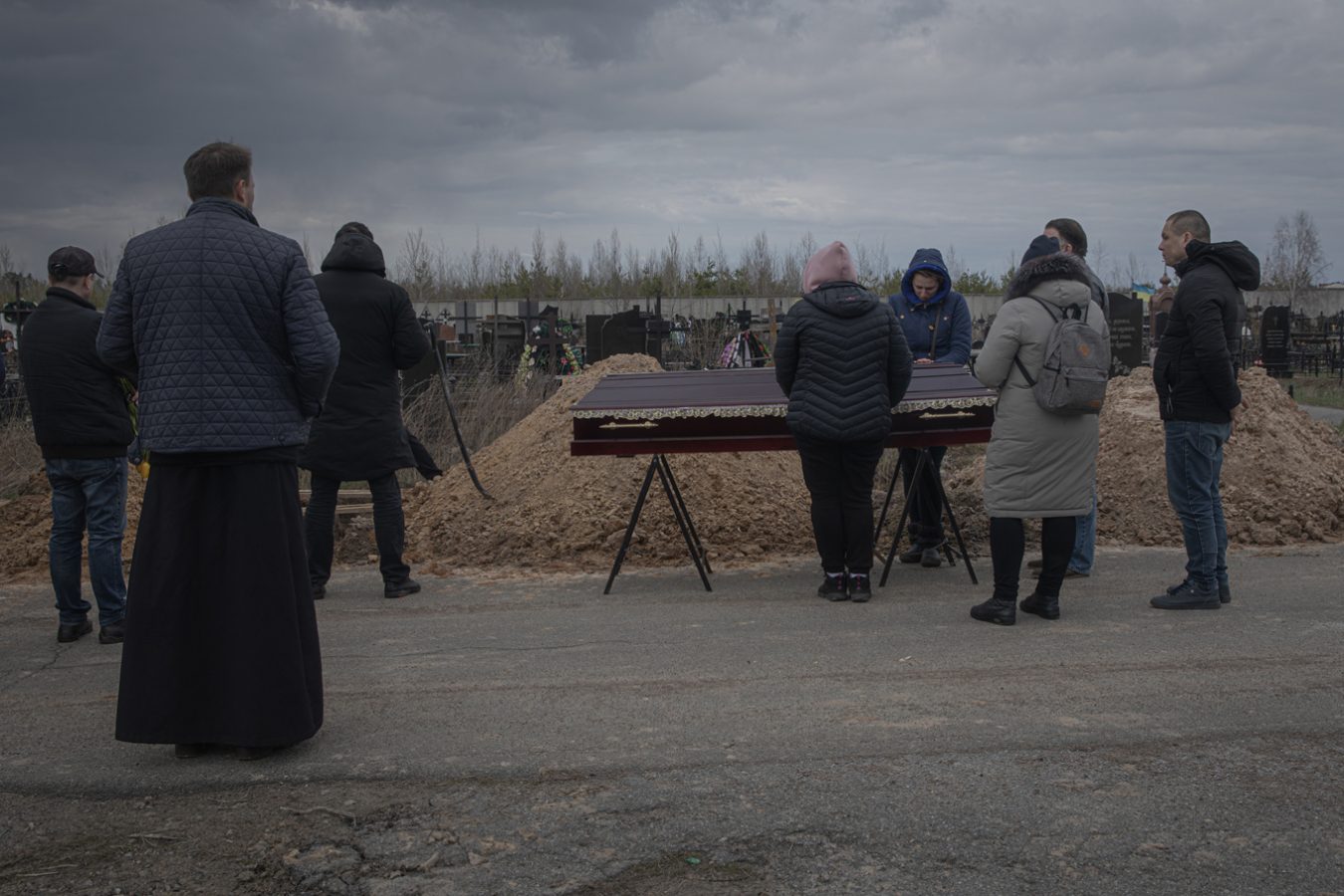
Andriy’s father and his relatives attend his funeral at Bucha Cemetery 3. Andriy’s body was found handcuffed.